discover us for yourself

Discover
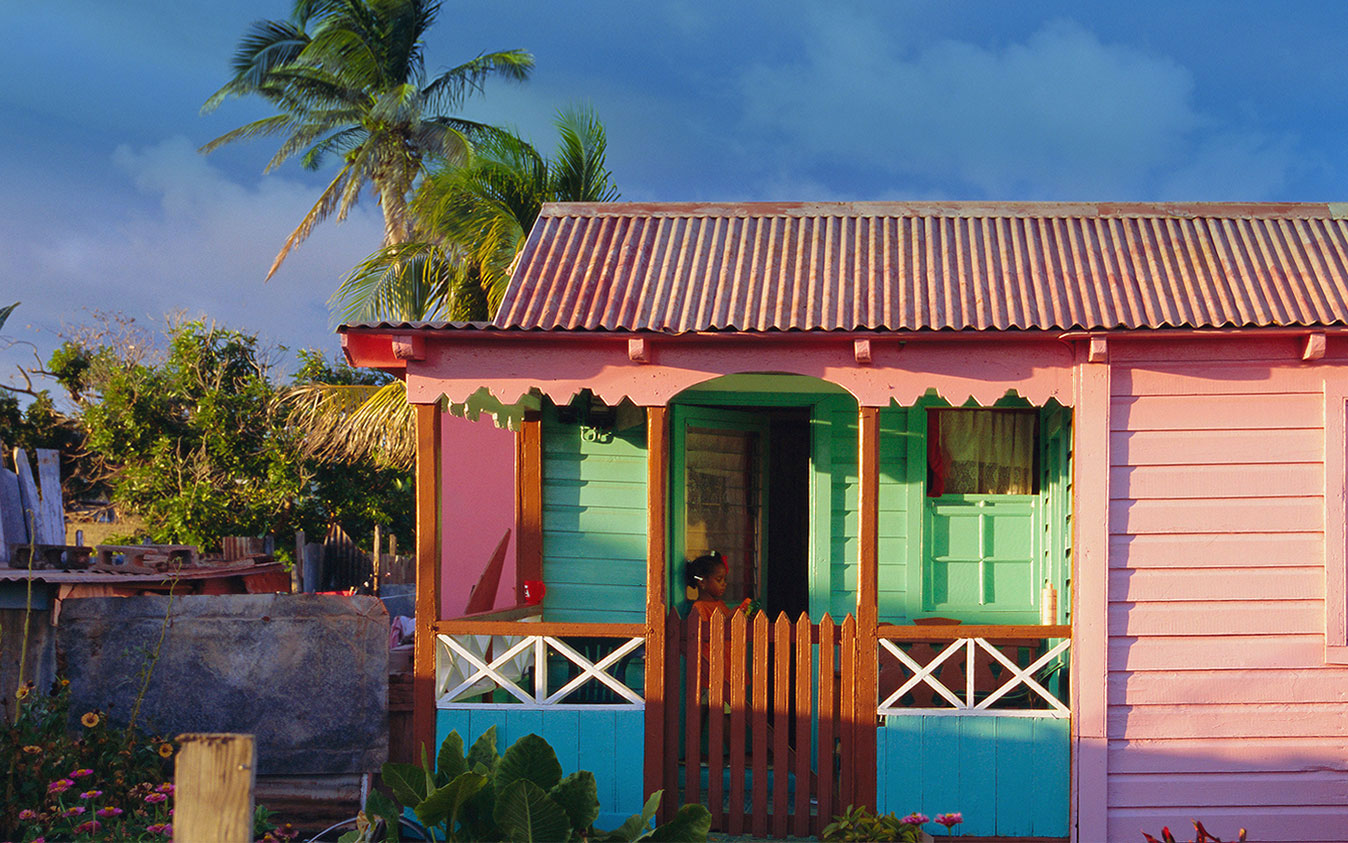
the stories of our proud and friendly people, our charming and colourful villages, our fascinating ruins, our intriguing rain forests,
and our traditions that span centuries.
Our People

Pam Tyson
Pam Tyson Pamela Ann Mabel Tyson was born on the 7th April 1932 to Veronica nee Peters and her husband Warren Tyson. Her father was an employee of J W Thurston and Vo, Ltd who rose through the ranks because of his diligence and sense of responsibility. Like him, Pamela worked her way up in the civil service. She started as a substitute in the Crown Attorney’s Chambers then served at the Post Office and Treasury Department...
Read more
Marcus Of The Woods
Marcus, a slave who had been born in St. Kitts, first drew attention in 1813 when he ran away from Hutchinson’s Estate and took refuge in the mountains. A listing of runaways that was presented to the Council, in September 1814 showed that he had been absent from the estate for ten months and was believed to have caused damage to provision grounds and three steers. He quickly gained a reputation as a “notorious runaway...
Read more
Mary Charles
Mary Charles George Mary Georgina Charles-George was born on 19 July 1913 to Henry Elijah Charles and Frances Ann nee Carey of Phillips Village. Both of her parents were skilled people who had grown up in the same village. Henry was a carpenter and Frances as a seamstress. Mary was their first child and they instilled in her a good work ethic and a great sense of pride. As a child she attended the Estridge Moravian School...
Read moreOur Places

The Berkeley Memorial
Berkeley Memorial, The Cirucs, St. Kitts The Berkeley Memorial was erected in 1883 and was for a long time the only public memorial commemorating an individual in St. Kitts. It was dedicated to the memory of Thomas Berkeley Hardtman Berkeley, a legislator and owner of the estates called Fountain, Greenland, Greenhill, Ottleys, Shadwell and Stone Fort. The structure contains a clock and drinking fountain. It was designed and produced by George Smith and Co of Glasgow, Scotland...
Read more
Youth and Community Centre
The Youth and Community Centre on Victoria Road stands on a foundation that survives from the first Government House of St. Kitts. For a long time St. Kitts did not have a Government house as many of the Governors and Lieutenant Governors were natives who had their own private residences on the island. John Nugent was an exception. He owned property in Montserrat and resided in the Leewards for several years. Soon after his arrival, both...
Read more
Charles Fort
Charles Fort Entrance Based on “The Military and institutional Occupations of Charles Fort, St. Kitts, West Indies” by Gerald Schroedl and Todd M Ahlman in Historical Archaeologies of the Caribbean: Contextualizing Sites through Colonialism, Capitalism and Globalism edited by Todd M Ahlman and Gerald F Schroedl (Tuscaloosa, University of Alabama Press, 2020) The Second Anglo-Dutch war was fought between 1665 and 1667. France became involved as it had a defensive alliance with Holland. In St. Kitts where...
Read moreOur Events

Independence 19 September 1983
National Flag of St. Christopher (St. Kitts) and Nevis Statehood, granted in 1967 was viewed by all former territories as a transitions stage. The hope of an one independent West Indian nation had been crushed in 1962. It became necessary for the individual states to work out their own future. In the elections of 1975 the Labour Party obtained a mandate to seek independence from Britain. Discussions started in earnest in 1976 but an effective resolution of...
Read more
Good Friday
Good Friday is a quiet day in St. Kitts. Many go to the various church services that commemorate Christ’s Crucifiction . At home, there are hot cross buns for breakfast while lunch consists of cooked saltfish, mackerel, or fresh fish served with a mixture of starchy foods (potatoes, sweet potatoes, breadfruit, green figs, yams, cassava, dasheen, edoes) and greens. In St. Kitts, Good Friday and the rest of the Easter weekend is also the time...
Read more
Labour Day - first Monday in May
Labour Day March, 1955 The afternoon events at the park were well attended. The Union’s Entertainment Committee organised a Steel Band Competition. Esso, Wilberforce, Amstel, Boston Braves, Battalion and Invaders competed with the last emerging as the winners. Lord Croft sang a special Labour Day Calypso. The bands then played on the streets of Basseterre. Looking to the future, the Messenger’s editorial declared, “The idea is not yet as firmly rooted as it might have been, but...
Read more"In this bright future, you can't forget your past"
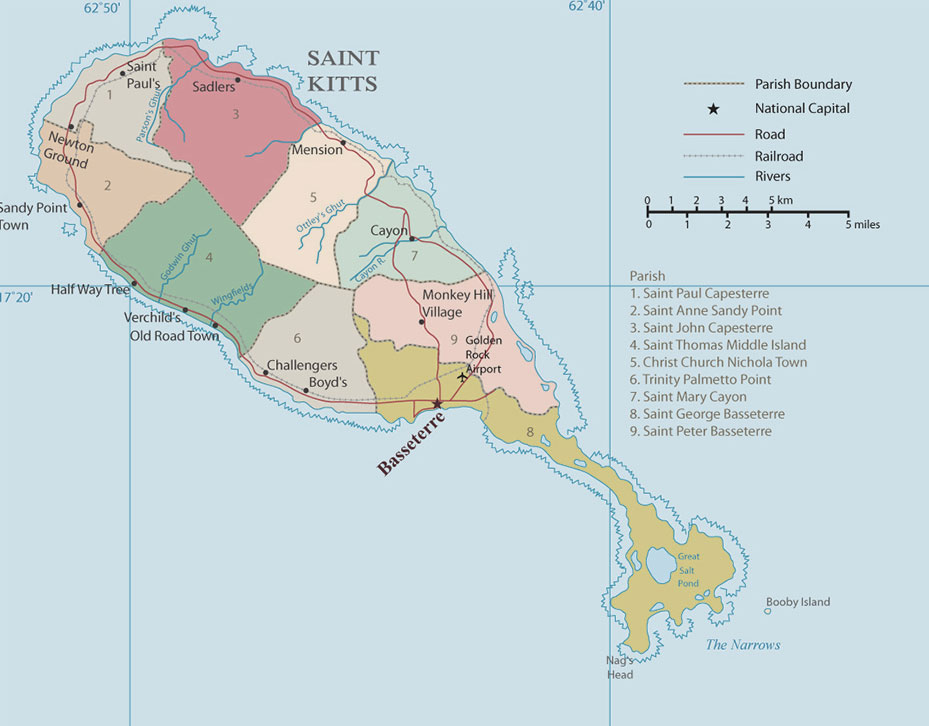
Interactive Map
Move your mouse over the red map markers to view information about each particular location. To read more, click the marker for further information. Locations may also be selected using the adjacent listbox.

Government Headquarters
Church Street
Basseterre
St. Kitts, West Indies
Tel: 869-465-2521 ext.1208
Website: www.nationalarchives.gov.kn

19 St. Clair Avenue
Port-of-Spain
Trinidad and Tobago
© Copyright 2018 National Archives, St. Kitts Nevis. All rights reserved.
Web Development: Genesis